


November 11, 2026
Turbo Timer vs Fan Cool-Down Timer: What’s the Difference?
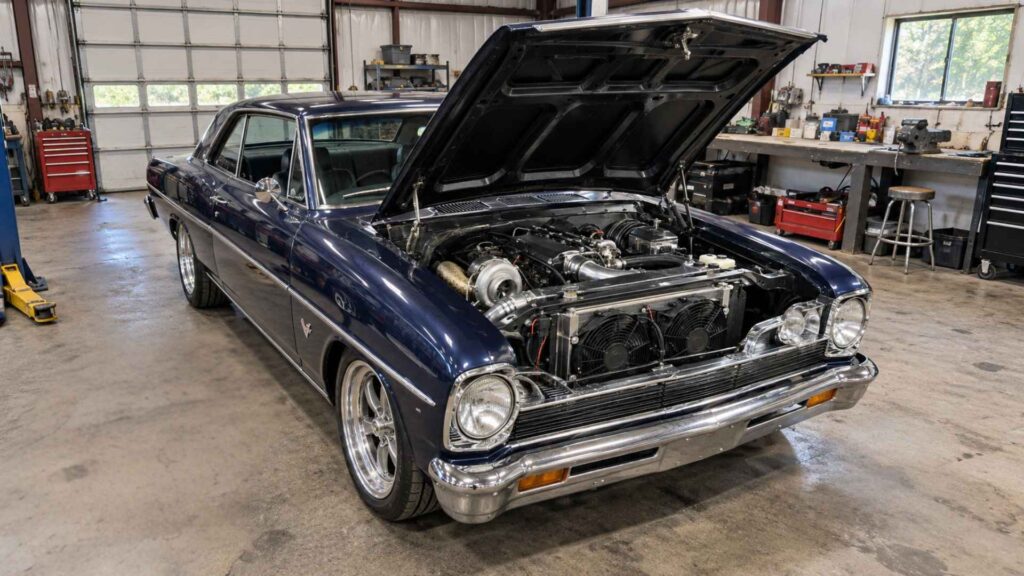
Every few weeks someone calls the shop and asks for “one of those turbo timers.” Then we ask a couple of questions. Is the car turbocharged? Usually not. Is the electric fan shutting off the moment the key comes out? Usually yes.
That’s not really a turbo timer problem. It’s a fan problem. The two devices sound alike, both kick in after you shut the car off, and both exist to deal with heat. But they are two different items. They protect different parts, they work in different ways, and putting the wrong one on your car either does nothing or creates a new headache.
Here’s how to tell them apart, and how to figure out which one your car actually needs.
The Short Answer
A turbo timer runs the engine for a set time after the key is shut off, so the turbocharger can cool down while oil is still flowing through it.
A fan cool-down timer (also called a cool-down delay) runs the cooling fan or fans after the engine is shut off, to cool the radiator and the engine.
The first is about saving turbo bearings. The second tackles heat soak throughout the engine compartment, and it suits any car with an electric fan, whether there’s a turbo under the hood or not.
Why the Hottest Moment Comes After You Park
While you’re driving, heat has somewhere to go. The water pump moves coolant, air rushes through the radiator, and oil keeps circulating. Turn the key off and all of that stops at once. The iron, aluminum, and exhaust parts are still full of heat, though, and that heat now spreads into everything around it.
That’s heat soak. Coolant temperature climbs after shutdown, fuel lines and carburetors cook, and parts like the starter and wiring sit in an oven. Anyone who has watched the temp gauge creep up after parking, or had a hot-start struggle 20 minutes later, has seen it happen.
Both timers exist because of this. They just attack it in different places.
What a Turbo Timer Does
A turbocharger is driven by exhaust gas, so it lives right next to the hottest part of the engine. Its shaft spins on bearings in a center housing, and engine oil both lubricates and cools those bearings.
Shut the engine off right after a hard pull and the oil supply stops while the turbo is still glowing hot. The oil sitting in that center housing bakes into hard carbon deposits. Mechanics call this oil coking. That isn’t a typo for “cooking”: coke is the hard, black carbon left behind when oil is baked past its limit, and you’ll also hear the problem called oil baking. Over time, those deposits starve the bearings, wear the seals, and shorten the turbo’s life.
A turbo timer wires into the ignition circuit. When you pull the key, it keeps the engine idling for a set time, usually somewhere between 30 seconds and a couple of minutes. Oil keeps flowing, exhaust temperatures drop, and the turbo gets a chance to cool before the oil stops moving. Then the timer shuts the engine down on its own.
These were hugely popular in the 1990s import scene, when many turbos were cooled by oil alone and a few minutes of idle made a real difference.
Do Modern Turbos Still Need One?
Most don’t, at least not for normal driving. Three things changed:
- Water-cooled center housings. Most modern turbos run coolant through the bearing housing as well as oil. After shutdown, hot coolant keeps rising and moving on its own (a thermosiphon effect), which keeps the bearings well below the temperature where oil bakes into carbon.
- Better oil. Modern synthetics hold up to heat far better than the oils of 30 years ago.
- Factory after-run pumps. A lot of newer turbo engines come from the factory with a small electric coolant pump that keeps working after you shut the engine off. In other words, the car already looks after the turbo once you park, which is the job people used to buy a turbo timer for.
There are still cases where a turbo timer earns its place: an older oil-only turbo, a big aftermarket setup, or a car that sees track days and gets parked straight off the hot lap. For everyone else, an easy last mile or 30 seconds of idle in the driveway does the same thing.
There’s also a practical catch. A turbo timer leaves a running car with no key in it. Many U.S. states and cities have laws against leaving a vehicle unattended with the engine running, and an idling car is an easy target for theft. Some insurers ask about it too. Check your local rules before you install one.
What a Fan Cool-Down Timer Does
A fan cool-down timer doesn’t touch the engine at all. Once the ignition is off, it lets your electric cooling fan (or fans) carry on for a few extra minutes, then switches it off by itself.
That sounds small, but it goes straight at heat soak. The fan keeps pulling air through the radiator, cools the coolant that’s sitting there, and moves hot air out of the engine bay. Fuel lines, the carb, the starter, and the wiring all sit in less heat, and the temp spike after you park is smaller.
It matters most on street rods and classics with electric fans. Many fan setups are wired so the fan only runs with the key on. The moment you shut the car off at the end of a summer cruise, the fan dies too, exactly when the engine needs it most.
Our CDT-240 fan cool-down timer was built for this job:
- Set the fan’s run time anywhere from roughly 2 to 4½ minutes. Just turn the adjuster through the small opening at one end of the case with a mini screwdriver.
- It has optional re-trigger and manual override features.
- It’s made to pair with our Switch Kit for electric fans and the AR-75 high-amp relay, but it also works with other brands’ fan sensors and relays.
- It’s compact and made in the USA.
The engine never runs, so there’s no fuel burned and nothing for a thief to drive away. The only draw is the fan itself for a few minutes. If your fan relay has a habit of failing, sort that out first. Our guide on why cooling fan relays keep failing walks through it.
Turbo Timer vs Fan Cool-Down Timer, Side by Side
| Turbo Timer | Fan Cool-Down Timer | |
|---|---|---|
| What keeps running | The whole engine, at idle | Only the electric cooling fan(s) |
| Main job | Protect turbo bearings from oil coking (baked-on oil) | Fight heat soak in the radiator and engine bay |
| Which cars | Turbocharged cars, mostly older or oil-cooled turbos | Any car with an electric fan, turbo or not |
| Typical run time | About 30 seconds to 2 minutes | A few minutes (CDT-240: about 2 to 4½) |
| Fuel used | Yes, the engine is idling | None |
| Car left running unattended | Yes | No, the engine is off |
| Battery load | Low, the alternator is still charging | The fan’s draw for a few minutes |
| Where it wires in | Ignition circuit | Fan relay and temperature switch circuit |
Which One Does Your Car Need?
Start with two questions: is the car turbocharged, and does it use an electric fan?
- Naturally aspirated hot rod or classic with an electric fan. You need a fan cool-down timer. A turbo timer does nothing for you, since there’s no turbo to protect. This covers most street rods, restomods and engine swaps.
- Car with a belt-driven mechanical fan. Neither timer helps. The fan stops when the engine stops. If heat soak is a real problem, an electric fan conversion with a cool-down timer is the upgrade to look at.
- Modern turbo car, driven normally. You probably need neither. The factory cooling system and an easy last mile handle it.
- Older oil-cooled turbo, or a turbo car that sees hard track use. A turbo timer, or the habit of idling for a minute, makes sense. If the car also runs an aftermarket electric fan, a fan cool-down timer helps with the rest of the engine bay.
- Turbo swap into a classic with an electric fan. This is the one build that can justify both.
Can You Run Both?
Yes. They don’t overlap, because they control different circuits. On a turbo build with an electric fan, the turbo timer idles the engine for its short window, the engine shuts off, and then the fan timer keeps the fan going for a few more minutes. The turbo gets its oil, and the radiator and engine bay get their airflow.
Wire each one the way its maker specifies. For the CDT-240, the installation guide shows the wiring.
The Bottom Line
If your car has a turbo, the question is whether that turbo needs help cooling its bearings. For most modern turbos it doesn’t. If your car has an electric fan, the question is whether that fan quits the moment you shut the key off. On most hot rods and classics it does, and that’s the gap a fan cool-down timer fills.
For street rods, restomods and swapped classics, the fan is almost always the part that matters. The CDT-240 cool-down timer keeps it running for a few minutes after you park, with no engine left idling. Questions about your setup? Call us at 714-971-8543, Monday through Saturday, 8 AM to 5 PM Pacific.